
Bafang mid-drive motors: compare before you order
Choose the right Bafang mid-drive motor, no guesswork.
Choosing a Bafang mid-drive motor rarely starts with the right question. Buyers compare watts, hesitate between 500 and 750, and discover on delivery that the housing does not clear the chainstays. The mechanical constraint comes before the power figure: bottom bracket width, clearance around the housing, controller amperage. This site is built in that order.
Start with the bottom bracket
A BBS kit does not bolt onto the frame: its axle runs through the bottom bracket shell in place of the original spindle, and the housing presses against the shell. Two measurements are enough to know whether the install is possible: the shell width (68, 73, sometimes 100 or 120 mm on a fat bike) and the clearance around the shell, on the chainstay side and under the down tube.
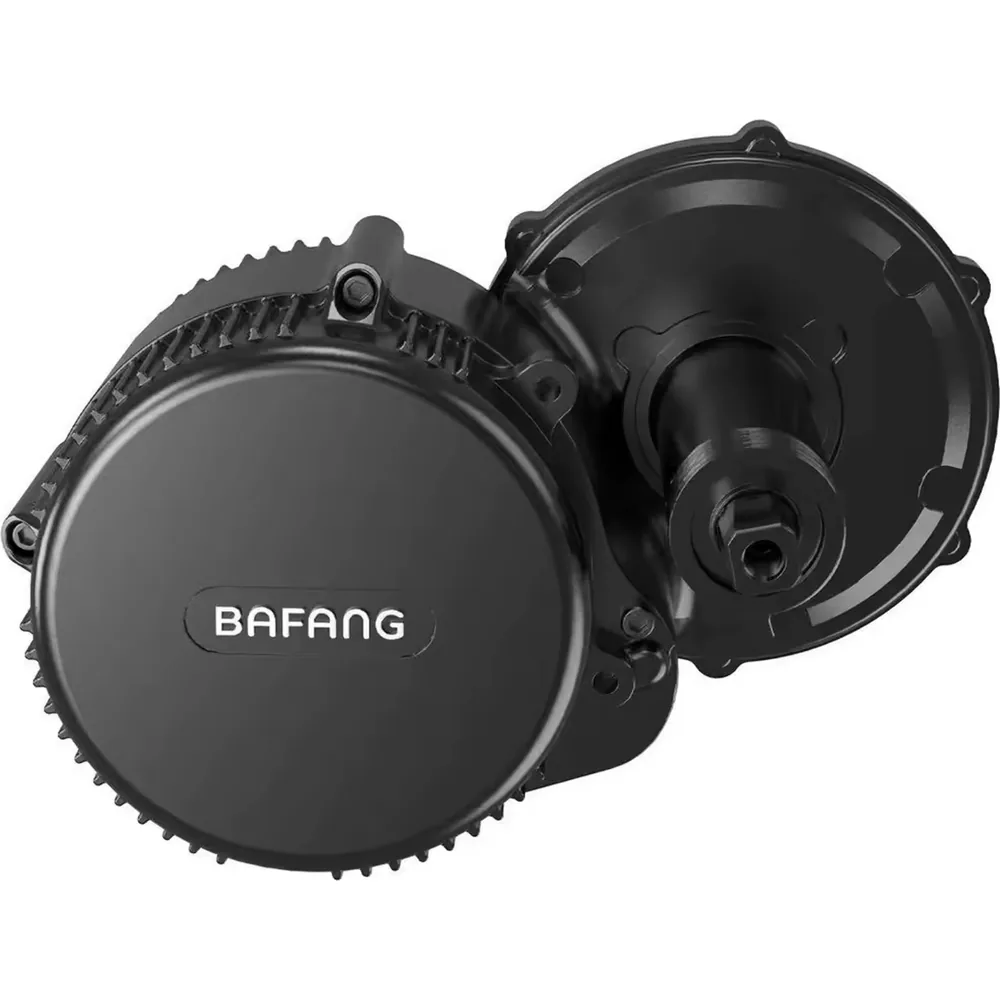
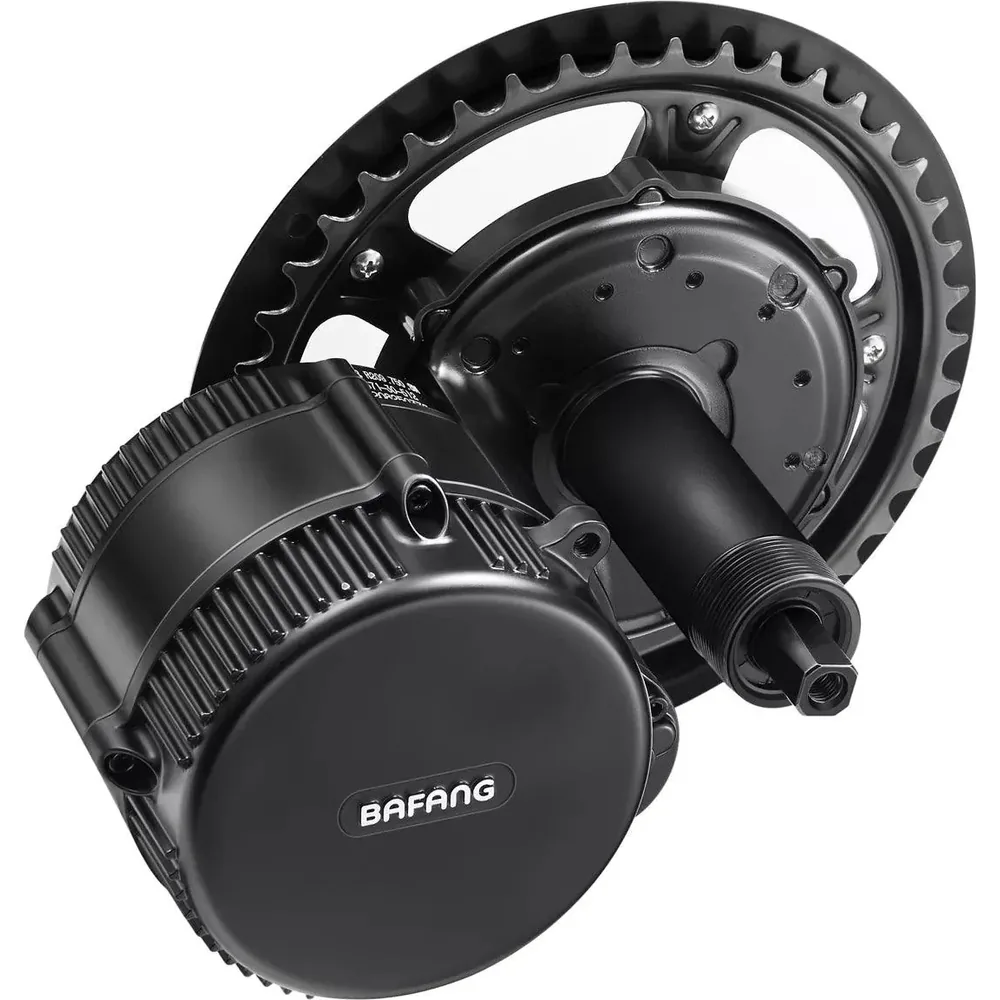
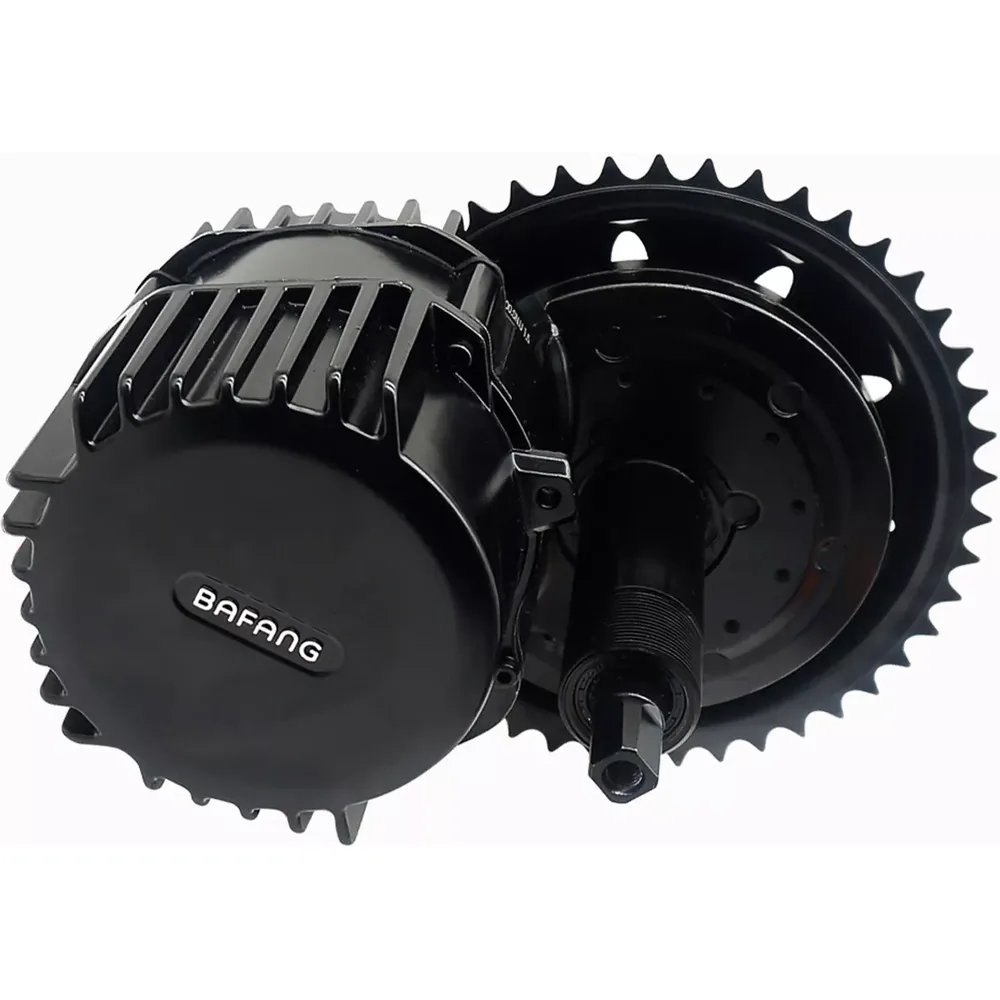
The BBS01B and the BBS02B cover 68 to 73 mm, with dedicated 100 and 120 mm versions. The BBSHD extends the range to 68–100 mm and also comes in 120 mm. These ranges say nothing about the bulk of the housing, and yet that is what most often blocks an install advertised as compatible.
The step-by-step procedure, tape measure in hand, is detailed in installing a Bafang motor: the step-by-step assembly.
The three Bafang conversion kits
BBS range
What really separates the three models
Torque announces what the motor can move; controller amperage announces how quickly it responds. Read together, they describe three distinct uses rather than a simple power scale.
| BBS01B | BBS02B | BBSHD | |
|---|---|---|---|
| Controller maximum current | 15 A | 25 A | 30 A |
| Maximum torque | 80 Nm | 120 Nm | 160 Nm |
| One version stays a pedelec | ✓ | — | — |
| Reuses a 36 V battery | ✓ | — | — |
| Cargo bike, trailer, steep grade | — | — | ✓ |
The sensor type, however, never changes: all three kits run on cadence, meaning they respond to the crank spinning rather than to the force applied. What that changes at the pedals is explained in cadence sensor or torque sensor.
Where to start
- Still undecided on the model: which Bafang motor to choose for your use.
- Want the three kits side by side: the full Bafang motor comparison.
- Looking for a realistic budget, accessories included: Bafang motor prices.
- Wondering what the law allows: 250 W or 750 W, what the regulation says.
What we don't do
We do not assemble the motors we compare. Our pages follow the manufacturer's documentation, field by field, and leave blank the cells Bafang does not publish. Our method is written out plainly in how we evaluate these motors.
FAQ
Which Bafang motor stays within the legal e-bike framework?
Only a motor with 250 W nominal power whose assistance cuts off at 25 km/h stays a pedelec under European regulation. Within the range covered here, that is the 250 W version of the BBS01B. The BBS02B and the BBSHD exceed that threshold and move the bike into a different category.
Does a Bafang kit fit any bicycle?
No. The motor housing of the BBS kits clamps onto a threaded bottom bracket shell measuring 68 to 73 mm, face to face, with long-axle versions covering 100 and 120 mm. A press-fit shell, an unusual width, or a frame with tight chainstays rules out the install — it is the leading cause of a failed purchase.
What is the difference between the BBS01B, the BBS02B and the BBSHD?
Three controller amperages, so three characters: 15 A for the BBS01B, 25 A for the BBS02B, 30 A for the BBSHD. Torque follows the same progression, from 80 to 160 Nm. The install itself is identical on the first two; the BBSHD needs more clearance around the housing.