
Bafang BBS02B: the best-selling conversion kit
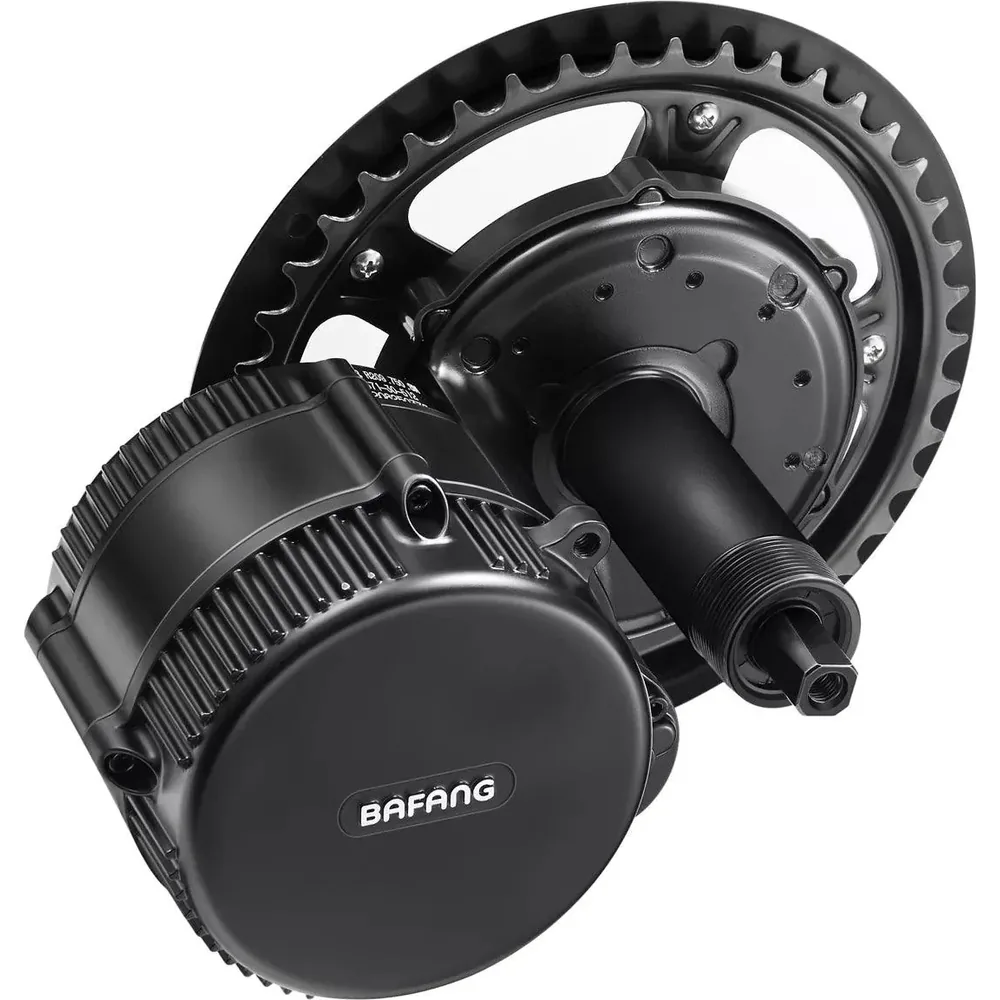
The BBS02B is the Bafang kit you run into most often, and not by chance: it sits at the range's balance point. Its 120 Nm cover nearly everything, its 25 A controller gives a strong pull, and it fits the same bottom brackets as the BBS01B. It's the model where most conversions come to rest.
| Rated power | 500–750 W |
|---|---|
| Maximum torque | 120 Nm |
| Supply voltage | 48 V |
| Sensor type | Cadence |
| Maximum controller current | 25 A |
| Bottom bracket compatibility | 68–73 mm (versions 100 / 120 mm) |
| Motor weight | 4,0 kg |
25 A: the real difference from the BBS01B
Between a BBS01B and a BBS02B, the torque gap (80 versus 120 Nm) shows on the spec sheet; the amperage gap is felt from the first pedal stroke. At 25 A, assistance arrives fast and strong. In town, that means pulling away at the lights without hunting for the right gear. In the mountains, it means holding a long climb at walking pace without the motor running out of breath.
That reserve comes with a mechanical trade-off. Torque doesn't stop at the bottom bracket: it travels through the chain, cassette and derailleur, designed for a cyclist's legs. On a secondhand touring bike, the drivetrain becomes the conversion's number-one wear item.
The small accessory that protects the drivetrain
A gear-shift sensor cuts assistance for the fraction of a second the chain takes to jump from one sprocket to another. It's the most cost-effective accessory in a BBS02B build: it costs little and prevents most broken teeth.
Frame compatibility
Like the BBS01B, the BBS02B clamps onto a threaded shell of 68 to 73 mm, with long-axle versions in 100 and 120 mm for wide frames. Its housing is very slightly bulkier, which changes nothing on a standard frame but can be enough to block the install on a rear-suspension frame whose pivot sits close to the shell.
The stated weight is 4.0 kg, just 100 g more than the BBS01B — a gap with no real consequence, even on a light bike. The real weight question lies elsewhere: in the 48 V battery it needs, which often weighs three times as much as the motor.
The battery is part of the motor
A controller able to draw 25 A only matters if the pack is willing to supply it. It's the most commonly overlooked point of a BBS02B build: a 48 V battery advertised as compatible but limited in discharge current will cut assistance mid-climb, exactly where you counted on it. The motor will look at fault, when it never received what it was asking for.
The same logic applies when moving up from a BBS01B. The entry-level model accepts 36 V; the BBS02B does not. An existing pack in good condition therefore can't be reused, and that extra purchase weighs more than the price gap between the two kits. Bafang motor prices breaks down that budget line by line.
Who it's the right choice for
Hilly commutes, loaded touring, a light trailer, mixed terrain: the BBS02B covers all of it without ever feeling like it's working at its limit. It becomes debatable in only two cases — a strictly flat urban use, where its 25 A will never be called on and where the bike's legal status matters more, and a heavy cargo or daily mountain use, which calls for the model above.
Strengths and limits
✓ Pros
- 120 Nm: grade, load and hill starts stop being an issue
- 25 A controller for an immediate pull
- Same install footprint as the BBS01B (68–73 mm)
- Spare parts and displays very widely available
✕ Cons
- Falls outside the pedelec framework in both versions
- Accelerated wear of the original drivetrain
- Cadence sensor: assistance ignores the actual force applied
- Requires a 48 V battery able to sustain 25 A continuously
Our rating, criterion by criterion
The detail of each criterion and its weighting is published in our rating system.
Price
Budget 500 to 650 € depending on the version and the retailer. The gap mainly comes down to the display supplied with the kit and whether the chainring and gear-shift sensor are included. The ranges for all three kits are gathered in Bafang motor prices.
The two motors that flank it
One step down, one step up
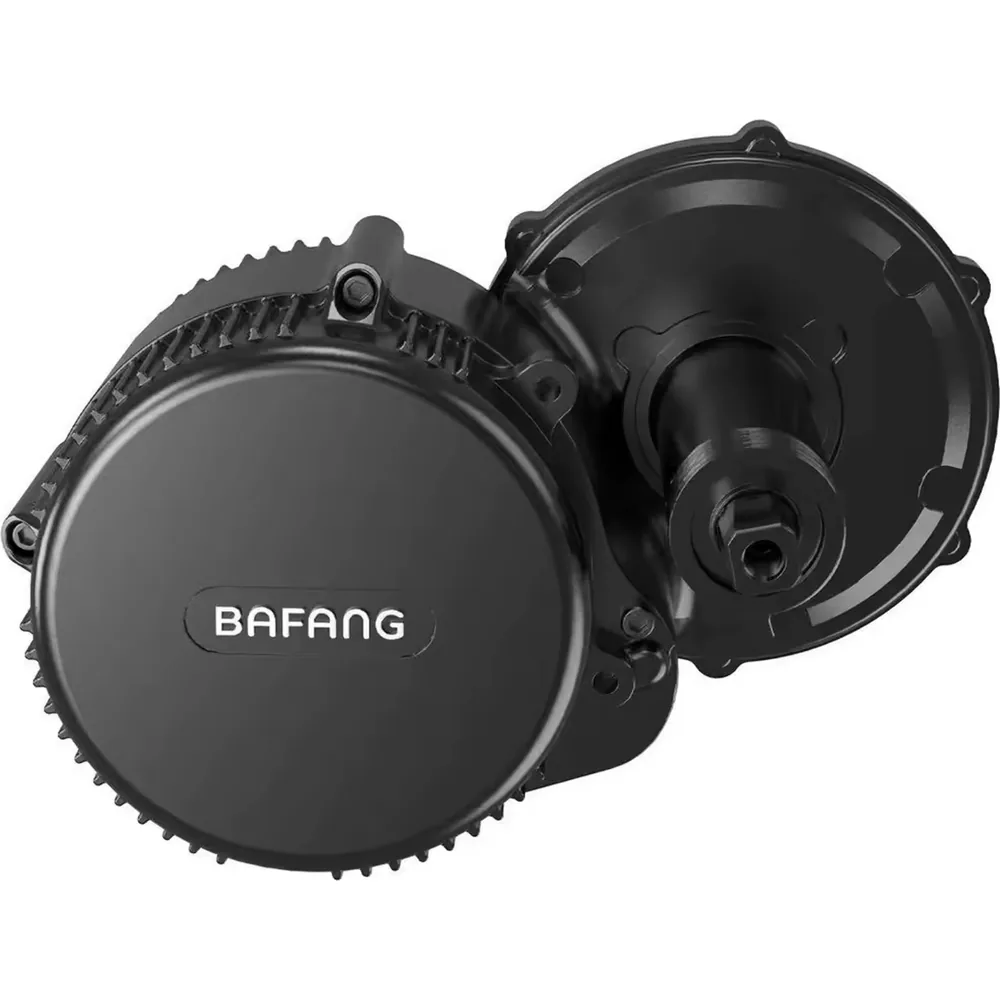
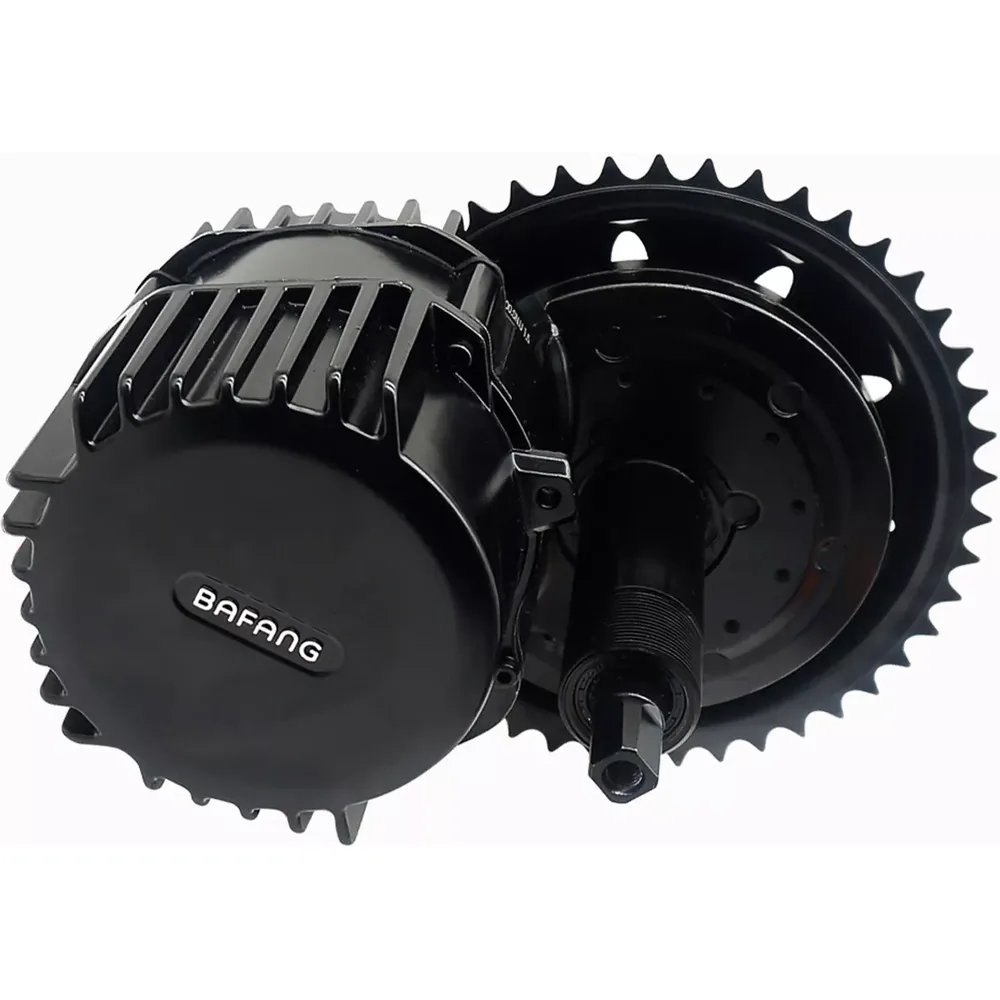
If you're torn with the model above, BBS02B versus BBSHD settles the torque and amperage question without detours.
FAQ
Does the BBS02B wear out the drivetrain?
It sends 120 Nm through a chain and cassette not designed for that load. Wear speeds up mainly when shifting under load: a gear-shift sensor, which briefly cuts assistance during the shift, resolves most of the problem.
Do I need a specific 48 V battery?
The controller draws up to 25 A. A 48 V battery must therefore be able to deliver that current continuously, with a management system sized accordingly. An undersized pack will cut out on a climb, with no fault in the motor.
BBS02B at 500 W or 750 W?
Both versions share the same mechanical block and the same torque. Neither stays within the pedelec framework: the choice comes down to available electrical power, not legal status.