
Bafang BBS01B: the kit that stays a bicycle
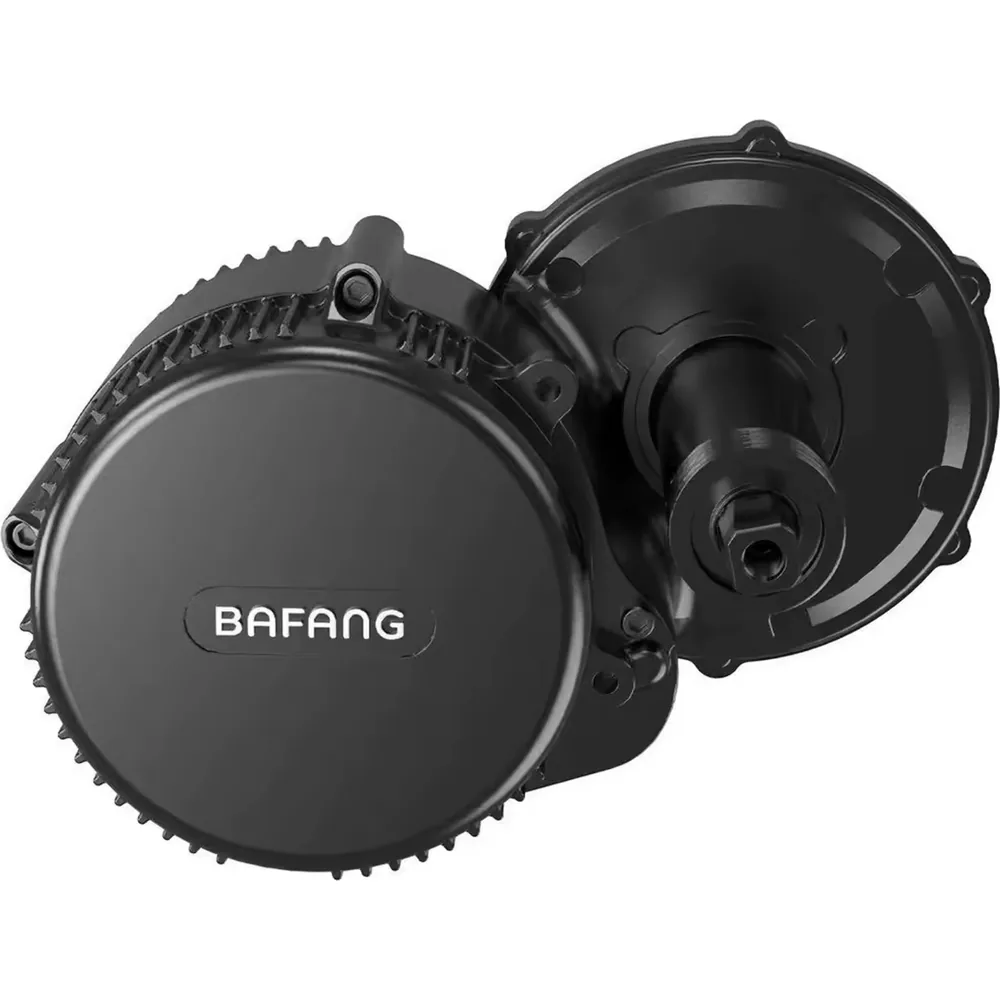
The BBS01B is the most understated of the Bafang kits, and that's precisely its appeal. With 80 Nm and a controller limited to 15 A, it doesn't try to turn a city bike into a sport machine: it assists it. It's also the only motor in the range with a version that stays compatible with pedelec status.
| Rated power | 250–350 W |
|---|---|
| Maximum torque | 80 Nm |
| Supply voltage | 36 V / 48 V |
| Sensor type | Cadence |
| Maximum controller current | 15 A |
| Bottom bracket compatibility | 68–73 mm (versions 100 / 120 mm) |
| Motor weight | 3,9 kg |
What the 15 A controller decides
Controller amperage is the real differentiator across the BBS range, far more than the power figure on the label. At 15 A, the BBS01B ramps up gradually: the pull off the line is smooth, assistance builds in a fraction of a second rather than arriving all at once. On a loaded city bike, that measured power delivery is a comfort; on a 12% ramp, it becomes a limit no display setting will remove.
The same amperage explains the motor's thermal behaviour. Less current means less heat to dissipate from a 3.9 kg housing — the BBS01B handles long, slow climbs better than its spec sheet suggests, as long as you're willing to pedal along with it.
The only version that stays a bicycle
The BBS01B is sold in 250 W and 350 W. This isn't a minor catalog nuance: European regulation only recognises as a pedelec a vehicle with 250 W nominal power whose assistance cuts off at 25 km/h. At 350 W, the same kit, on the same bike, falls outside that definition — with the consequences detailed in 250 W or 750 W: what the regulation says.
Nominal power is not a setting
A display lets you cap the assistance's cut-off speed, not change the motor's nominal power. A BBS01B 350 W capped at 25 km/h remains a 350 W motor in the eyes of the text. Buy the version that matches your intended use.
Fitting: 68 to 73 mm, and nothing else
The housing clamps onto a threaded bottom bracket shell measuring 68 to 73 mm, measured from one face of the shell to the other. Long-axle versions, in 100 and 120 mm, exist for wide frames and fat bikes. Outside these widths, there's no clean fix: no spacer, no homemade adapter.
Two frame details can defeat an install that looks compatible on paper: a right chainstay passing too close to the shell, and a down tube dropping low over the bracket. In both cases, the housing touches before it's fully seated. The measuring method is described in the installation guide.
What this kit doesn't try to do
The BBS01B isn't a throttled-down BBS02B. Its controller, torque and amperage form a coherent package, sized for a city or light-touring bike. Asking it to pull a loaded trailer up a long climb is asking it to do the job of the model above: it will, more slowly, and by asking more of the rider.
That restraint has a pleasant upside. An ordinary 36 V battery is enough, drivetrain wear stays close to that of a purely mechanical bike, and the bike keeps its original look — the housing is the most discreet of the three. For daily urban use, these three points often matter more than forty extra newton-metres.
Strengths and limits
✓ Pros
- 250 W version compatible with pedelec status
- The lightest and most compact of the BBS kits (3.9 kg)
- Accepts 36 V as well as 48 V: an existing battery can often be reused
- Progressive assistance, pleasant for loaded urban riding
✕ Cons
- 15 A controller: limited pull on steep grades
- Cadence sensor: assistance doesn’t scale with the rider’s effort
- 80 Nm is not enough for heavy cargo or very hilly use
- No compatibility beyond 73 mm outside the long-axle versions
Our rating, criterion by criterion
The overall rating is the simple average of these five criteria, whose grid is published in our rating system. The pedaling-feel score isn't a weakness specific to this model: all three kits in the BBS series run on a cadence sensor, and none can stand out on this point.
Price
Budget 400 to 500 € depending on the version and the retailer: axle width, the chainring supplied and the display model included shift the figure by several dozen euros. The battery is never included.
Motors to check before deciding
Within the same range
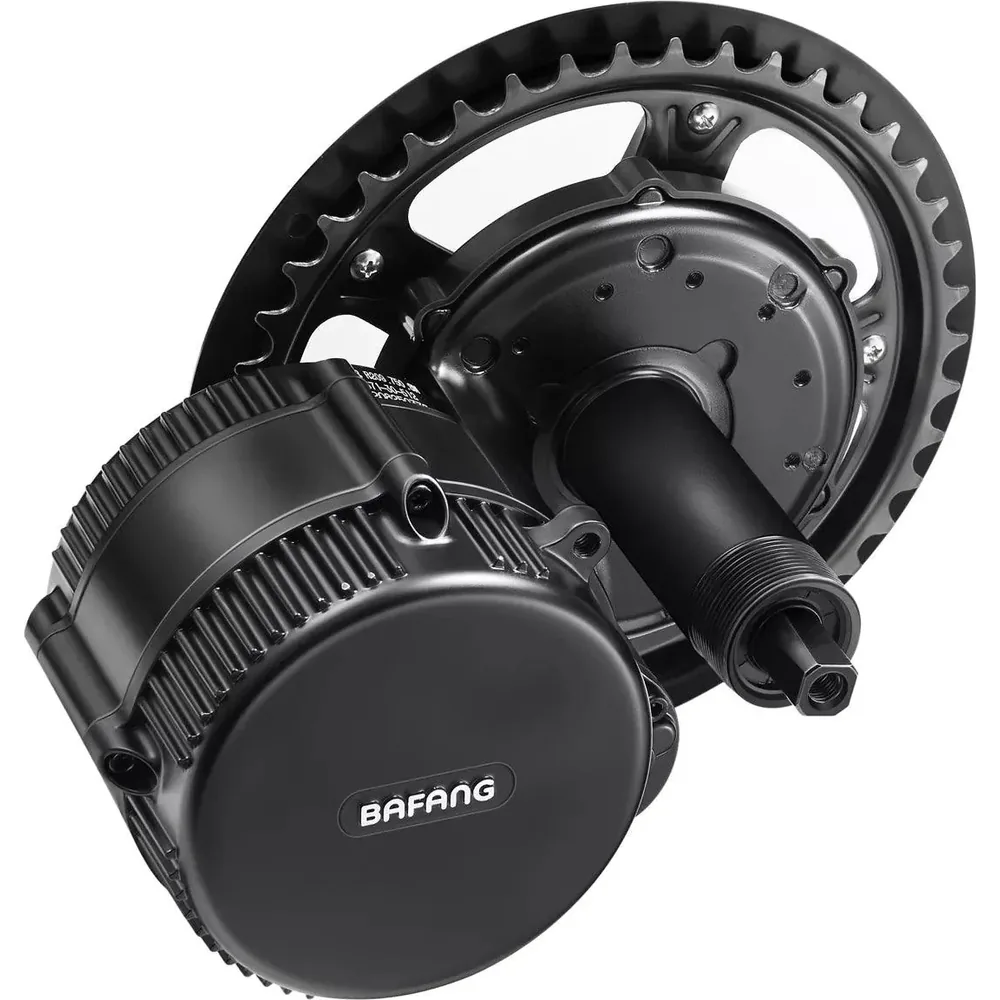
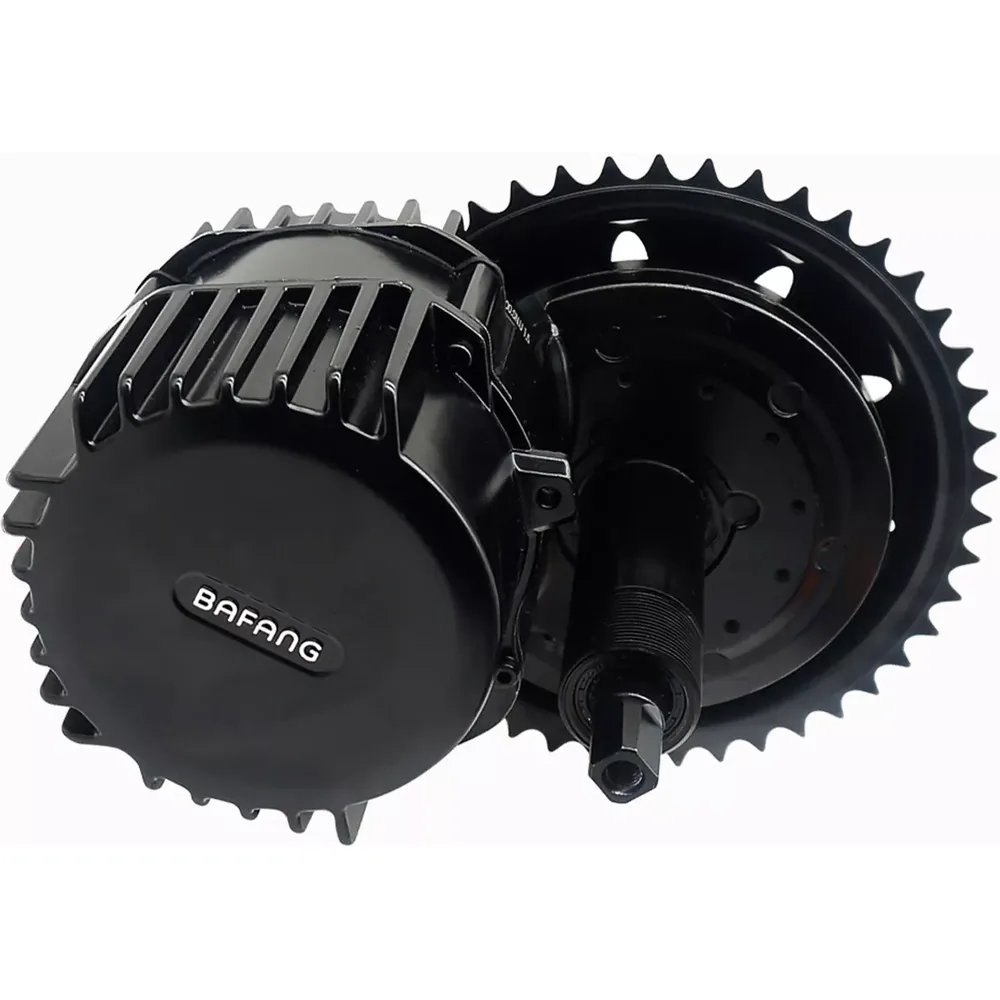
The most useful head-to-head remains BBS01B versus BBS02B: 80 or 120 Nm, 15 or 25 A, for around a hundred euros' difference.
FAQ
Is the BBS01B approved for use on public roads?
In its 250 W version, with assistance cut off at 25 km/h, it keeps the bike within the pedelec framework. The 350 W version falls outside it: the same kit then changes the vehicle’s legal status, regardless of how it’s actually used.
What battery does a BBS01B need?
The motor accepts 36 V and 48 V. Since the controller is limited to 15 A, a battery able to deliver 15 A continuously is enough; there’s no need to look for a high-discharge pack, which would add nothing here.
Can the BBS01B pull a child trailer?
Its 80 Nm are enough on flat ground and gentle grades. On a long climb with a load, the 15 A controller limits the pull: the BBS02B and its 25 A are better suited to this use.