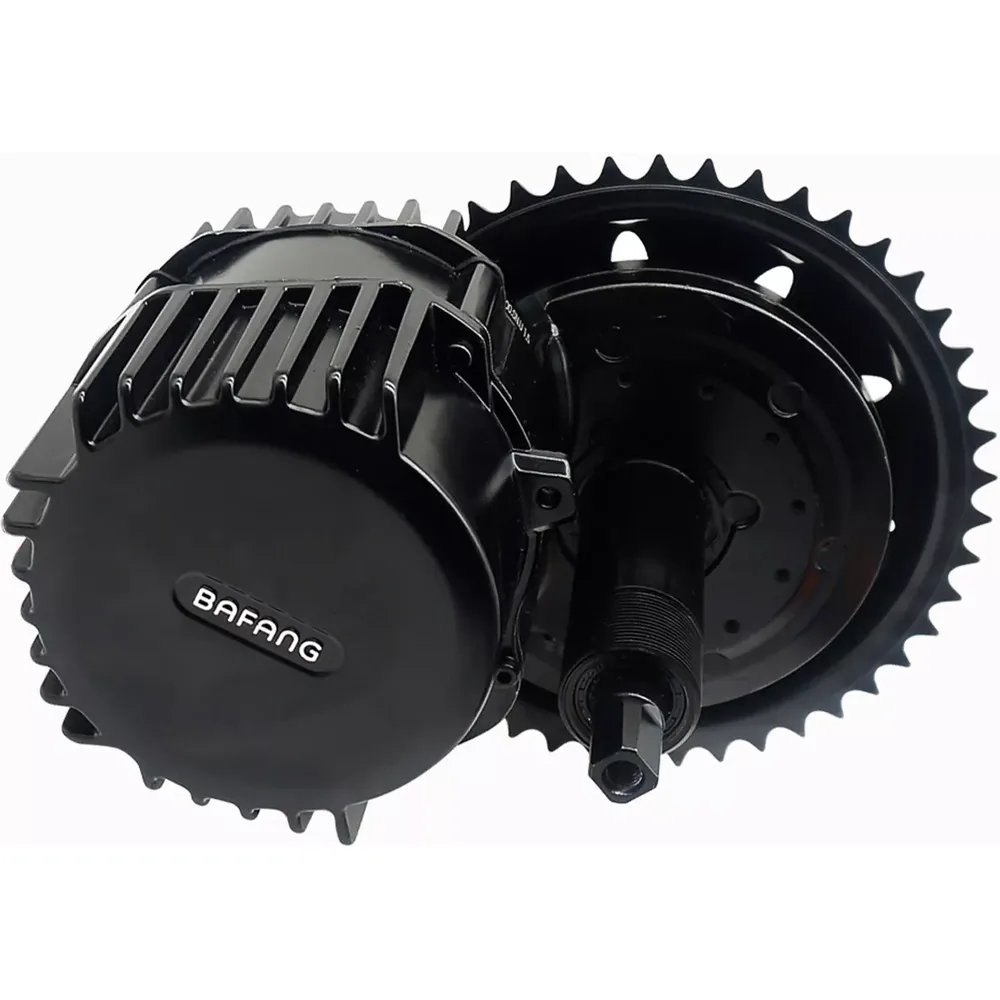
Bafang BBS01B or BBS02B: the first arbitration
| Rating | Produit | Prix | |
|---|---|---|---|
| 8.2/10 | 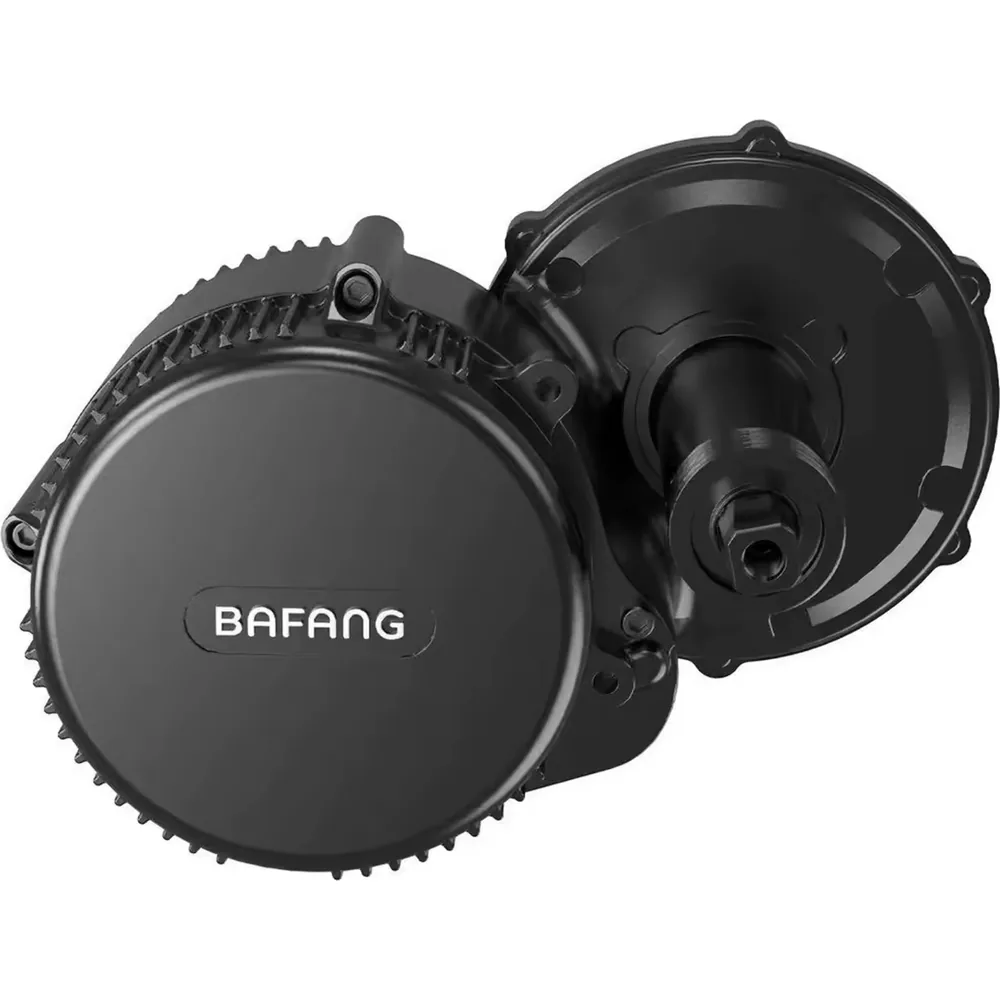 Bafang BBS01BBafang Bafang BBS01BBafang | 449 € | |
| 8.8/10 | 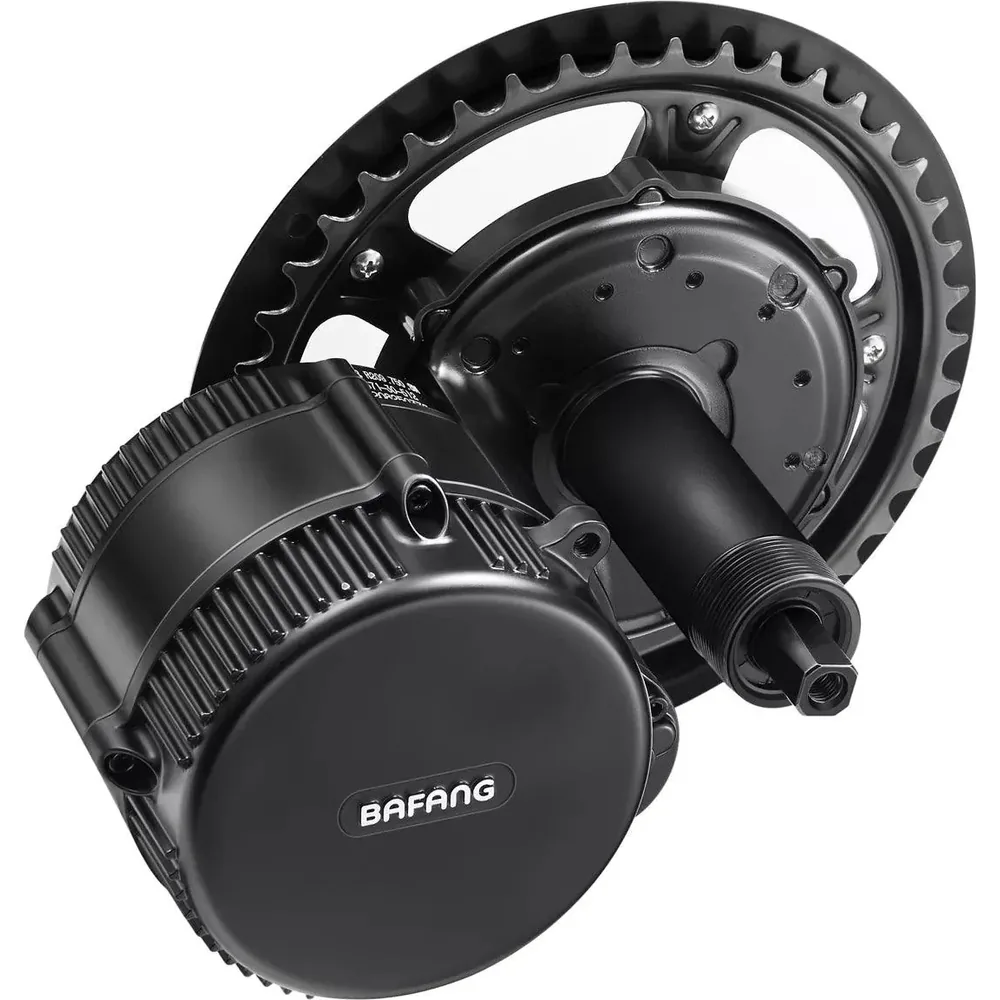 Bafang BBS02BBafang Bafang BBS02BBafang | 549 € |
A hundred euros separate the BBS01B from the BBS02B, and most conversions come down to this choice. Both motors fit the same frames, run with the same displays, and share the same cadence sensor. Everything else — torque, amperage, voltage, legal status — sets them apart.
The two spec sheets side by side
| Bafang BBS01B | Bafang BBS02B | |
|---|---|---|
| List price | 449 € | 549 € |
| Year | 2015 | 2015 |
| Rated power | 250–350 W | 500–750 W |
| Maximum torque | 80 Nm | 120 Nm |
| Supply voltage | 36 V / 48 V | 48 V |
| Sensor type | Cadence | Cadence |
| Maximum controller current | 15 A | 25 A |
| Bottom bracket compatibility | 68–73 mm (versions 100 / 120 mm) | 68–73 mm (versions 100 / 120 mm) |
| Motor weight | 3,9 kg | 4,0 kg |
What these two motors have in common
Before comparing, it's worth noting what doesn't change — that's what makes the arbitration so clear-cut. Both kits clamp onto a threaded shell of 68 to 73 mm, with the same long-axle versions in 100 and 120 mm. Both run on a cadence sensor, so with the same way of bringing in assistance. Both accept the same displays, the same motor-cutoff brake levers, the same gear-shift sensor.
In other words, moving from one to the other requires neither a different bike, nor a different install, nor a new learning curve. It changes only three figures: torque, controller amperage, and supply voltage. That's not many lines, and it's enough to split two uses apart.
What the table doesn't say loudly enough
15 A versus 25 A: the difference is felt before it's measured
On paper, you're comparing 80 and 120 Nm. In use, it's the controller that decides. The BBS01B builds its assistance progressively, the BBS02B delivers it almost instantly. Concretely: starting on a driveway ramp with full panniers, the first asks you to pedal along with it, the second takes care of it.
36 V or 48 V: a budget constraint in disguise
The BBS01B accepts both voltages. The BBS02B requires 48 V. If you already own a healthy 36 V pack, the BBS01B lets you reuse it, and the real price gap between the two kits then climbs well beyond a hundred euros.
The bike's status, a non-negotiable difference
A line the price doesn't show
In its 250 W version capped at 25 km/h, the BBS01B keeps the bike within the pedelec category. No version of the BBS02B stays there. This isn't a matter of performance but a change of status, with its own obligations: see 250 W or 750 W, what the regulation says.
The real price gap isn't the one on the labels
On paper, roughly a hundred euros separate the two kits: budget 400 to 500 € for the BBS01B and 500 to 650 € for the BBS02B, depending on version and retailer. That figure only tells part of the story.
If you're starting from zero, the battery gets bought either way, and the real gap then matches the advertised one: the BBS02B is a good deal. If you already own a working 36 V pack, the BBS01B reuses it and the BBS02B forces its replacement — the real gap doubles, sometimes more. That's the only case where the entry-level model becomes the obvious economical choice again. The line-by-line detail is in Bafang motor prices.
One last point weighs over time: the BBS02B's 120 Nm travel through a drivetrain built for human legs. The chain and cassette wear faster, and the gear-shift sensor becomes a sensible purchase. On a BBS01B, that same accessory remains useful, but its absence is more forgiving.
The choice in three situations
| BBS01B | BBS02B | |
|---|---|---|
| Flat urban commute, daily use | ✓ | ✓ |
| Hilly terrain, regular passes | — | ✓ |
| Loaded bike, child trailer | — | ✓ |
| Staying within the pedelec framework | ✓ | — |
| Reusing a 36 V battery | ✓ | — |
| Lowest total budget | ✓ | — |
Our recommendation
Bafang BBS02B
If legal status isn't your main criterion and the battery is going to be bought either way, the BBS02B's 25 A are well worth the price gap.
549 €
Bafang BBS01B
The 250 W version capped at 25 km/h is the only Bafang kit that doesn't force the bike into a new category. On flat terrain, its 80 Nm won't leave you wanting.
449 €
If the BBS02B already feels tight for your use, the next step no longer plays out on the motor alone: BBS02B versus BBSHD means revisiting the drivetrain and the brakes.
FAQ
Does the BBS02B fit exactly like the BBS01B?
Yes, on the same threaded shells of 68 to 73 mm, with the same long-axle versions in 100 and 120 mm. Its housing is very slightly bulkier, which only shows on a frame already tight on clearance.
Can I keep my 36 V battery when moving to the BBS02B?
No. The BBS01B accepts 36 V as well as 48 V, the BBS02B runs on 48 V. Moving from one model to the other therefore often means a new battery, to factor into the budget.
Is the BBS01B enough for daily city riding?
On flat to moderately hilly terrain, with a city bike and a loaded rack, yes. It’s on sustained climbs and heavy starts that its 15 A shows its limit.