
Bafang BBSHD: 160 Nm at the crank
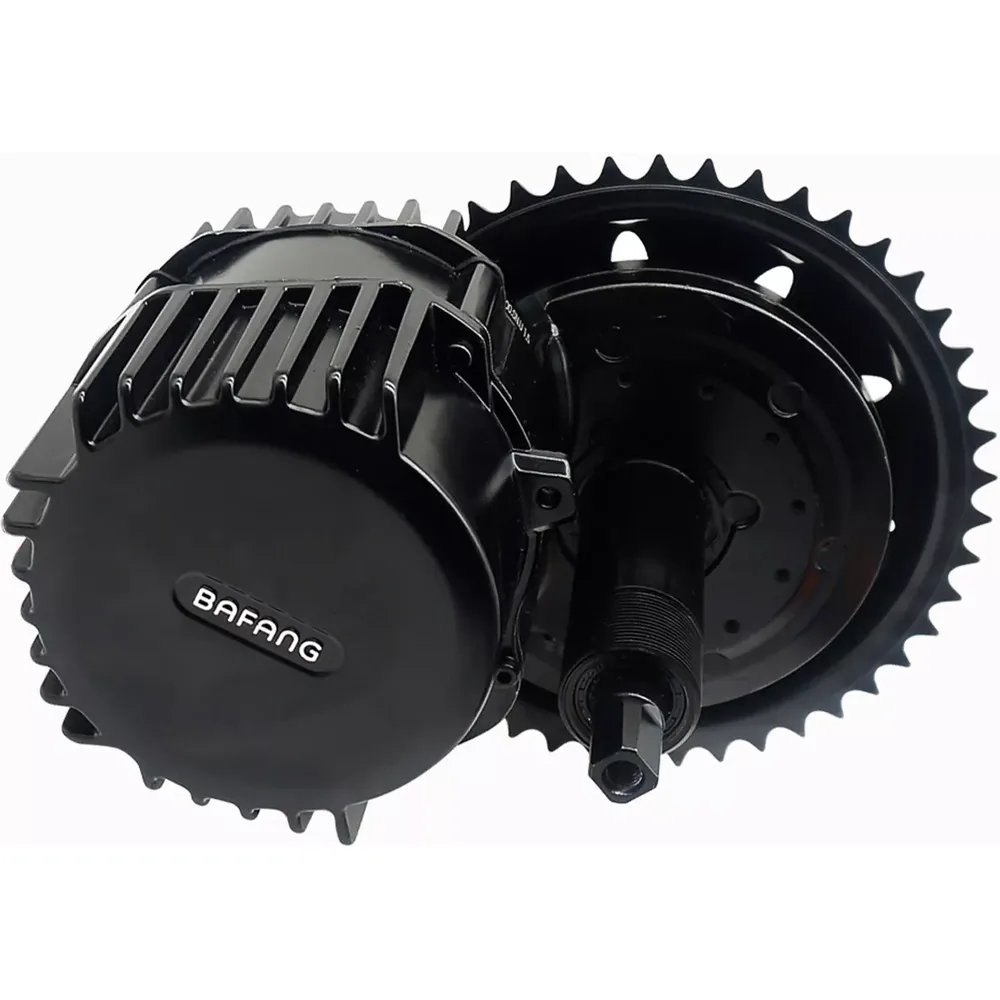
The BBSHD sits at the top of Bafang's kit range, and it doesn't hide it: 1000 W, 160 Nm, a 30 A controller and a 5.4 kg housing. It's the only motor in the BBS series built to handle a heavy load on a long climb without treating that as a special case. In exchange, it asks that the rest of the bike be up to the task.
| Rated power | 1000 W |
|---|---|
| Maximum torque | 160 Nm |
| Supply voltage | 48 V / 52 V |
| Sensor type | Cadence |
| Maximum controller current | 30 A |
| Bottom bracket compatibility | 68–100 mm (version 120 mm) |
| Motor weight | 5,4 kg |
What 30 A changes in behaviour
At 30 A, the assistance no longer ramps up: it's simply there. On a steep ramp, the motor holds a steady speed where a BBS02B starts to slow along with the rider. On a loaded cargo bike, the difference shows up as confidence rather than a stopwatch figure — you set off without wondering whether the climb will go through.
The other, less-discussed effect is thermal. A heavier housing is also more metal mass to absorb and dissipate the heat produced on slow climbs. The BBSHD copes better with uses where the motor works for a long time at low speed, exactly the situation that puts lighter kits in trouble.
The install becomes a subject in its own right
The compatibility range is the widest in the line-up: 68 to 100 mm, with a 120 mm version. That doesn't mean the install is simpler — rather the opposite. The housing is bulky, and on a modern mountain-bike frame, the cutout around the bottom bracket rarely leaves as much room as it did on a 2000s-era steel frame.
Check clearance before ordering
On this motor, the obstacle is almost never the shell width: it's the right chainstay, a cable routing path, or a suspension pivot. Measure the free space around the bottom bracket before buying, as explained in the installation guide.
What the BBSHD demands from the rest of the bike
A 160 Nm motor reshuffles which parts are wear items. The chain, front chainring and brake pads work in a regime that's no longer that of a purely mechanical bike. Two points deserve settling before the build:
Braking
A heavier, faster bike stops later. Disc brakes, with motor-cutoff levers, aren't a luxury on a BBSHD.
The drivetrain
A reinforced chain and sensor-assisted gear shifting: the condition for the cassette to last more than one season.
The bike's status
At 1000 W, the vehicle no longer qualifies as a pedelec. This point is developed in 250 W or 750 W: what the regulation says.
Strengths and limits
✓ Pros
- 160 Nm available from low RPM
- 30 A controller: no drop-off on long climbs
- Widest bottom bracket range in the line-up (68 to 100 mm)
- Housing mass favours heat dissipation
✕ Cons
- Bulky housing: frame clearance becomes the deciding factor
- 5.4 kg, 1.4 kg more than a BBS02B
- Requires upgraded drivetrain and brakes
- Falls well outside the pedelec legal framework
Our rating, criterion by criterion
The grid applied identically to all three kits is published in our rating system. Like its two siblings, the BBSHD runs on a cadence sensor: that's what caps its pedaling-feel score, not a tuning flaw.
What the BBSHD doesn't solve
High torque compensates neither for a tired drivetrain, nor a tight frame, nor an undersized battery. Of the three most common install failures, none is fixed by moving up the range: clearance around the shell, the pack's discharge current, and the chain's condition remain questions to settle before ordering. That's also why the BBSHD isn't the default choice in the range, despite its specs.
Price
Budget 700 to 850 € depending on the version and the retailer. Axle width, chainring and display explain nearly all of the gap. At an equivalent budget, you also need to plan for a 48 or 52 V battery able to keep up with 30 A, which weighs heavily on the total.
To compare before ordering
The two other kits in the range
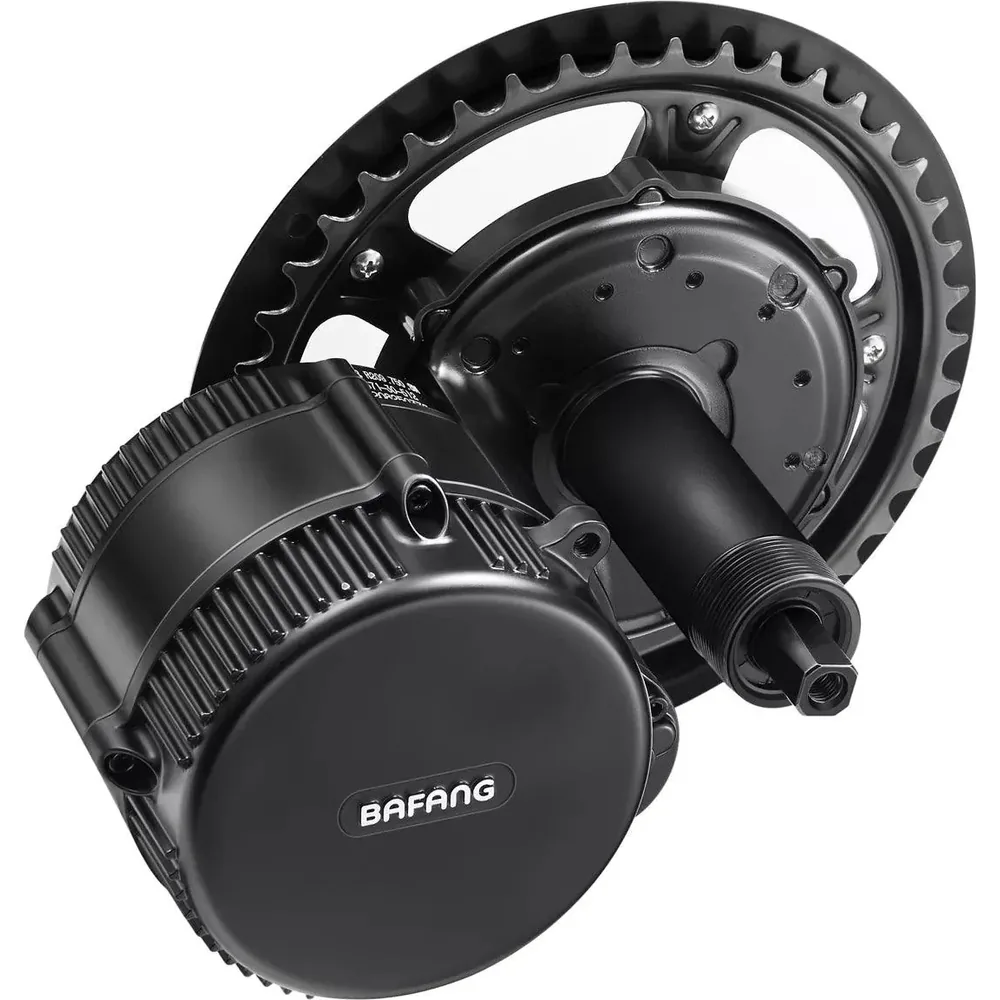
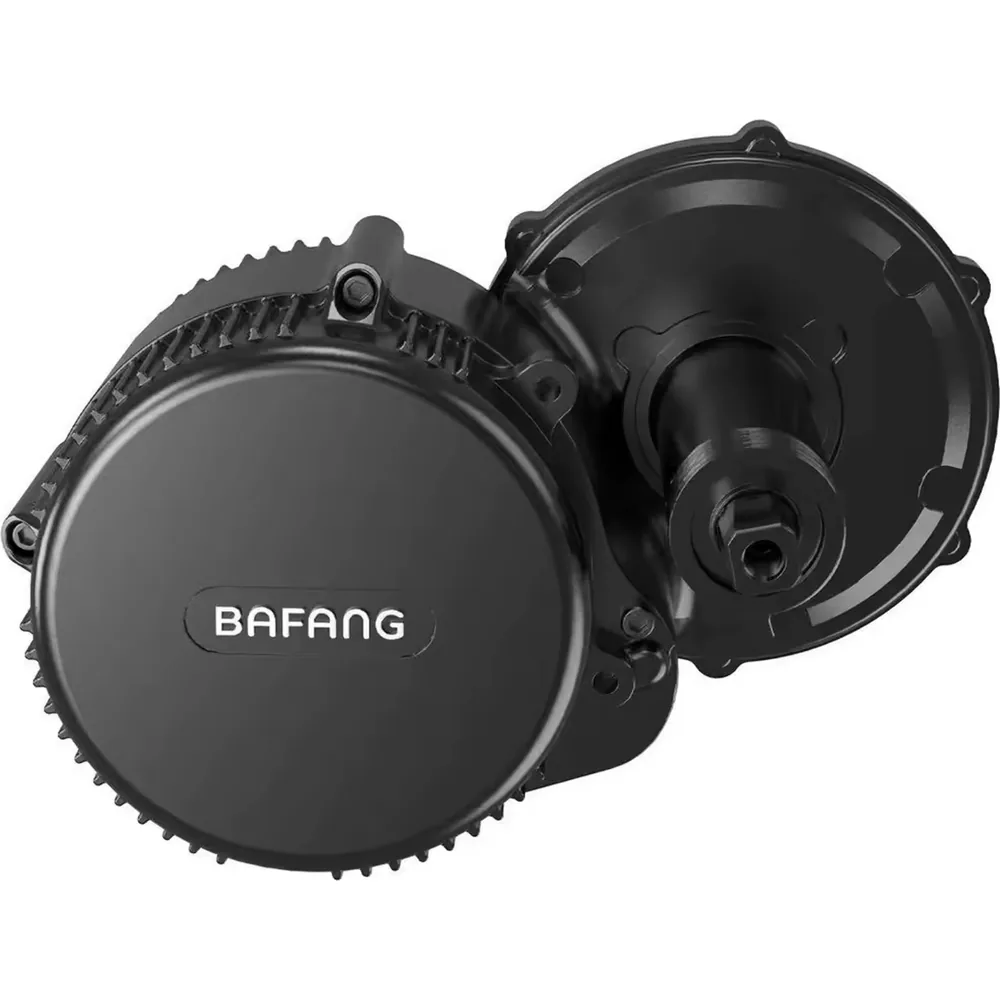
Before ordering the most powerful model, the useful arbitration is against the step below: BBS02B versus BBSHD compares torque, housing bulk and what each one demands from the rest of the bike.
FAQ
Does the BBSHD fit a 68 mm bottom bracket?
Yes: its stated range goes from 68 to 100 mm, and a 120 mm version exists for fat bikes. Its housing, however, is markedly wider than a BBS02B’s, which makes clearance around the shell more critical than with the other kits.
Do I need a 52 V battery to get the most from it?
The motor accepts 48 V and 52 V. At 52 V, the higher voltage translates into a higher rotation speed at the same assistance level; at 48 V, torque stays the same. 52 V is a comfort choice, not a requirement.
Does the BBSHD break drivetrains?
Its 160 Nm pass through the chain like any bottom-bracket torque. A reinforced chain, a suitable front chainring and a gear-shift sensor aren’t comfort accessories on this motor: they’re part of the build.