250 W or 750 W: what the regulation says
It's the question that decides everything else, and also the one most often misread. On the kit market, "250 W" and "750 W" don't describe two comfort levels: they describe two vehicle categories, under two distinct legal regimes.
The cumulative conditions
An electric-assist bicycle, under European law, meets three conditions at once:
A continuous rated power of no more than 250 W
This is a characteristic of the motor, stamped on its plate. It can't be adjusted from a display.
Assistance that tapers off and cuts out at 25 km/h
Beyond that speed, the motor must stop helping. The rider can of course go faster by pedalling or going downhill.
Assistance that only works while pedalling
A throttle that moves the bike without pedalling takes the vehicle out of the category, even at low power.
These three points are cumulative. It only takes one to be missing for the vehicle to change category — and that's not a matter of use or intent, but of characteristics.
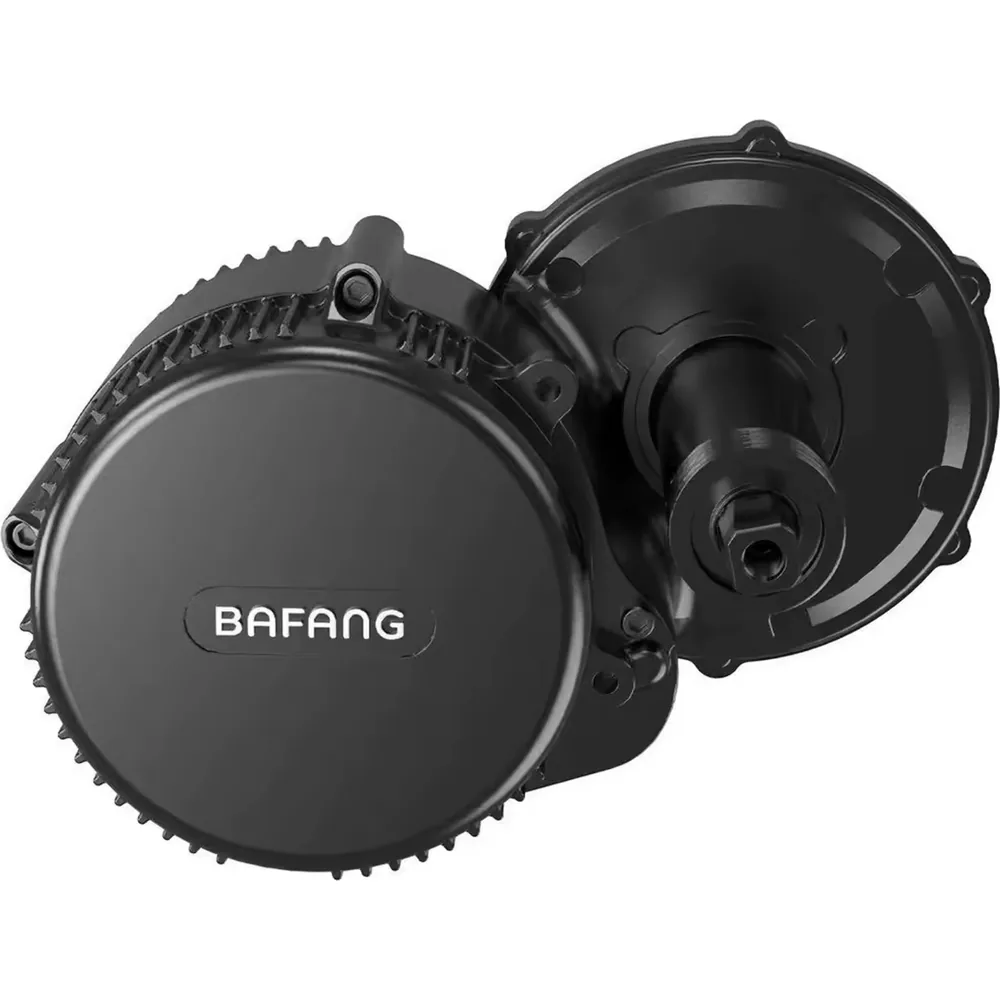
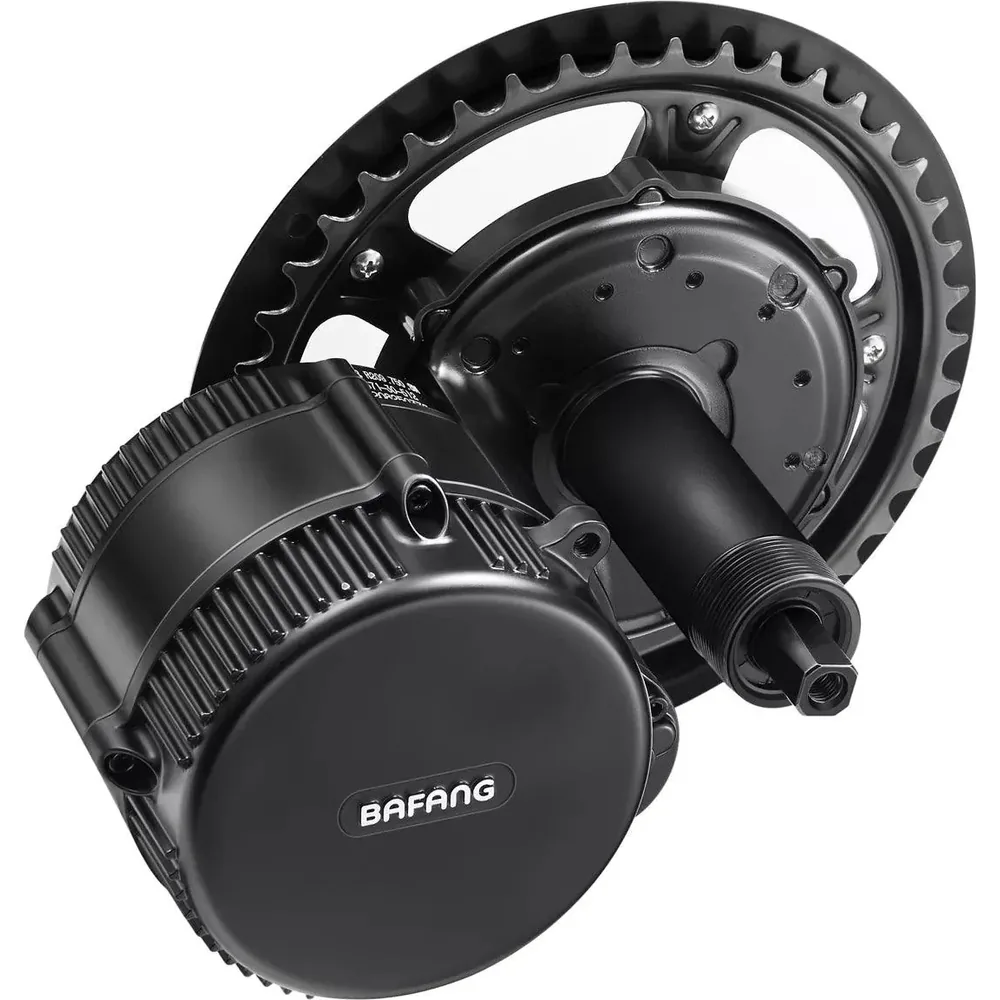
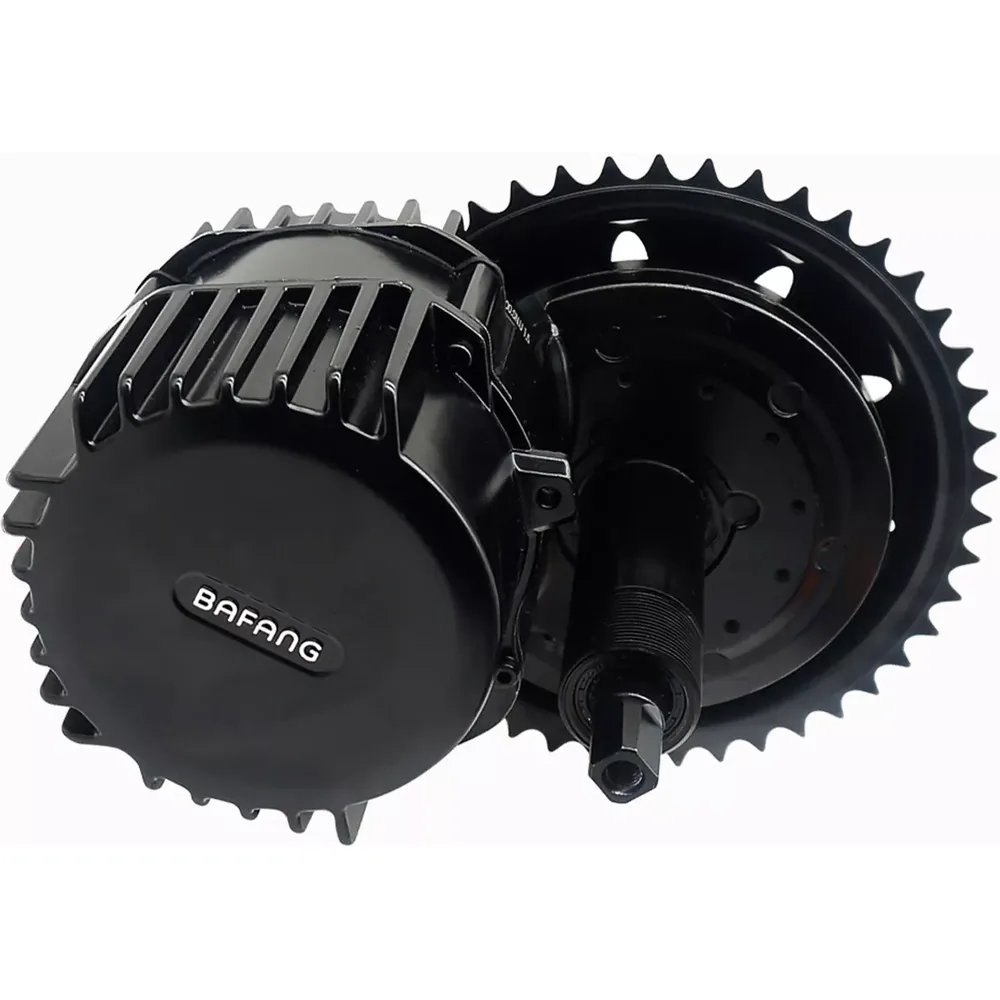
Where each Bafang motor stands
| Motor | Rated power | Stays an electric-assist bicycle |
|---|---|---|
| BBS01B (250 W version) | 250 W | Yes, if assistance cuts off at 25 km/h |
| BBS01B (350 W version) | 350 W | No |
| BBS02B | 500 to 750 W | No |
| BBSHD | 1000 W | No |
Only one model in the catalog, and only one of its versions, stays within the framework: the BBS01B at 250 W. That's a fact that should weigh far more heavily than it does in most comparisons.
The nuance deserves repeating, because it gets lost in retailer listings: the BBS01B exists in two versions that look identical in every respect, and only one of the two keeps the bike's status intact. The housing is the same, the install is the same, and the rated-power label is the only element that separates an electric-assist bicycle from an unapproved moped. Check that detail in the listing before ordering: it can't be fixed afterwards.
What crossing the line means
A vehicle that exceeds these limits isn't "a slightly powerful bike": it enters the moped category. In practice, that means type approval of the vehicle, registration, appropriate insurance, an approved helmet, and no access to cycling infrastructure. On a kit-built bike, obtaining that approval is an obstacle course.
The point discovered too late
In the event of an accident, the insurer examines the vehicle's compliance. A motorised bike above the thresholds, undeclared, risks a denied claim — even if the accident has nothing to do with the motor's power. This isn't legal advice: it's the reason this question needs settling before buying the kit, not after.
Capping, uncapping, reprogramming
A Bafang display lets you change the assistance cut-off speed and the assistance levels. This manipulation does not change the motor's rated power: it doesn't make a non-compliant motor compliant, and it does make a compliant motor non-compliant.
Full reprogramming — what it allows, what it costs — is covered in open-source firmware on Bafang motors.
Three common mix-ups
"Rated power" isn't "peak power". The regulation refers to continuous rated power, the level the motor can sustain over time. A motor rated at 250 W briefly develops more on a climb without leaving the category: that's expected, not a workaround.
A capped motor isn't a compliant motor. Setting the cut-off speed to 25 km/h on a 750 W kit changes neither the label nor the vehicle's category. Compliance is read from the motor's characteristic, not from a display setting.
A throttle takes the bike out of the framework. Many kits ship with a thumb throttle that moves the bike without pedalling. Simply wiring it up is enough to strip the bike of its status, even on an otherwise fully compliant 250 W setup.
How to choose with full knowledge
- Urban use, on open roads, with cycle paths: the only consistent option is the BBS01B at 250 W, capped at 25 km/h.
- Private use, on closed terrain: the other motors become an option, with a thought given to insurance.
- Mixed use: the most common case, and the most uncomfortable one. Better to face it before ordering than after a first encounter with a check.
For the rest of the decision, which Bafang motor to choose for your use folds this criterion in among the others.
FAQ
Is a 750 W kit capped at 25 km/h legal?
No. European regulation sets two cumulative conditions: a continuous rated power of no more than 250 W and assistance that cuts off at 25 km/h. Capping the top speed of a 750 W motor doesn’t change its rated power, so it doesn’t bring it into the category.
What does a bike fitted with a BBSHD become in the eyes of the law?
It falls into the moped category, with the obligations that come with it: type approval, registration, insurance, an approved helmet, and no access to cycle paths or greenways.
Can I ride a non-compliant motor on private land?
Private land closed to public traffic falls outside the highway code. That said, vehicle insurance and liability in case of damage remain questions to settle with your insurer beforehand, not after.